
You have already done some useful thinking. Keeping it somewhere you can use again gives you a better place to begin when the work returns.
Choose a repeatable task with a clear beginning and end
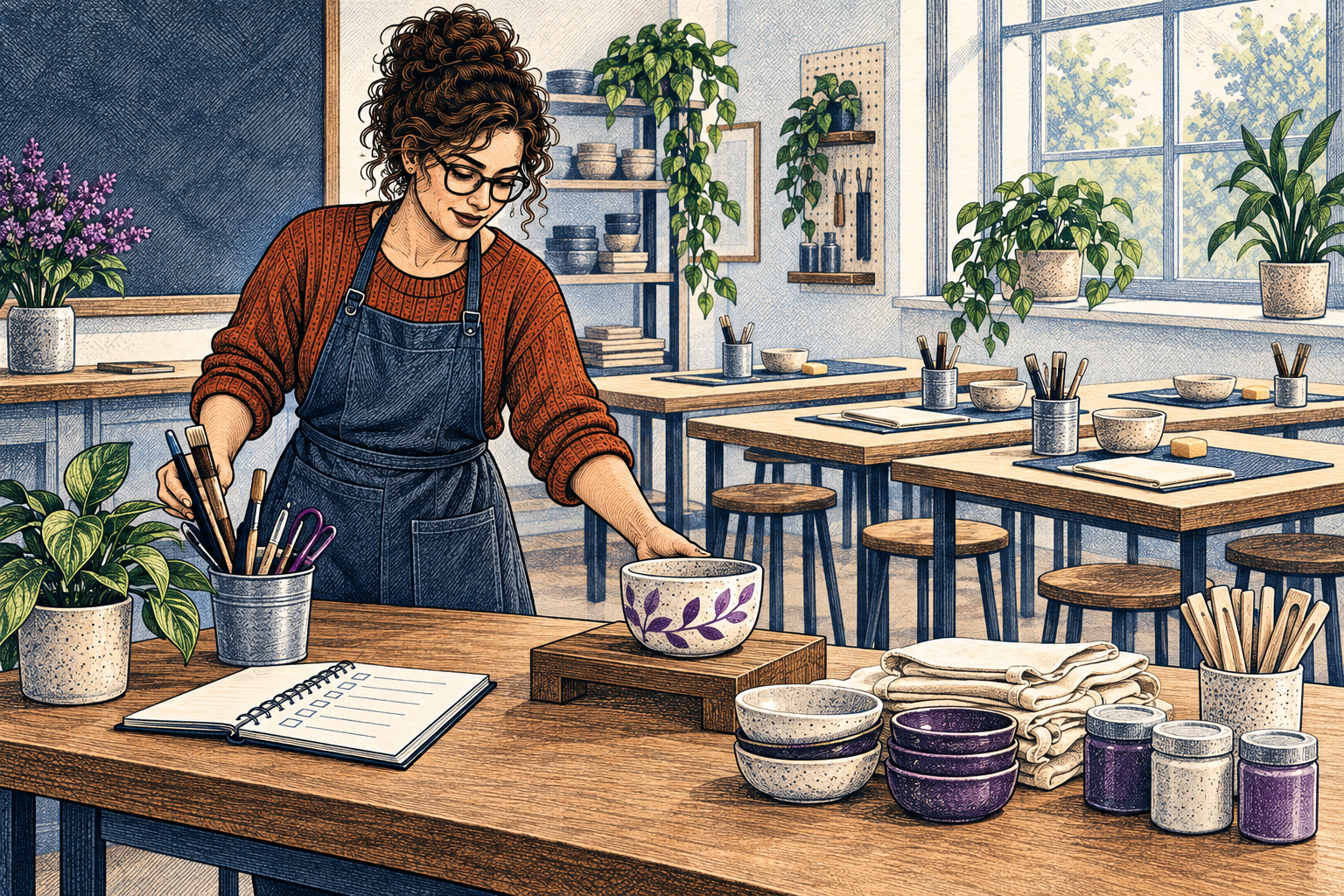
In a hypothetical craft studio, the owner teaches an introductory class several times a month. Before a class, she finds the participant list, gathers supplies, prepares an example, arranges the tables, and sends the arrival instructions. Some weeks she remembers the sequence easily. Other weeks she moves between those jobs, remembering another detail as she goes.
The work has a recognizable beginning: an upcoming class needs preparation. It also has a result she can check: the room, materials, and participant information are ready for that class.
That makes it a useful candidate for a playbook. By playbook, I mean a guide you can use while doing a recurring piece of work. It preserves the steps, questions, and decisions that help you complete it.
Choose work that returns often enough for your earlier thinking to be useful again. Keep the first guide small enough to use for a particular task. Preparing for an introductory class is more manageable than trying to document the whole studio at once.
The same approach can help with a recurring customer conversation, a meeting you lead, or a familiar review you need to complete. Choose something you understand well enough to explain and can observe the next time it happens.
Capture what you actually look for and decide
Work through the task while you have enough attention to explain it. Write down what you do, what information you use, and the decisions that determine the next step. Include the details you would otherwise have to remember or find again.
For the class, “gather supplies” may be too broad to help. The owner needs the supply list for that lesson and the current participant count. She also needs to know which items are shared and which must be available at a participant's place. Those details determine what she takes into the room.
Likewise, “send the email” becomes more useful when the guide links to the arrival message and says which details to check before sending it. The class time, location, and materials participants should bring need to match the session being prepared.
Write down the decisions behind the steps, including what a satisfactory result looks like. The purpose is to preserve the thinking someone needs at the moment of use. A checked box beside “room ready” means more when the guide explains what should be in place before participants arrive.
You can use a short document with links to the lists, messages, or examples involved. Give it a title you will recognize when you need it and keep it where you already look for that work. The best detail is difficult to use if finding it becomes another task.
Try the guide while doing the work
Use the first version during the next class preparation. Notice where you leave the guide to search for something, where a step needs interpretation, and where you do something useful that the guide omits.
You may discover that the participant count needs to be checked before supplies are gathered, or that the example needs to be prepared earlier. Put the steps in an order that works with the task. If another person will use the guide, let them try it and show you where the explanation leaves them unsure.
A playbook should help you use what you already know while leaving room for the situation in front of you. A different room or an unexpected change in attendance may require a decision. Make clear which adjustments are routine and when someone should pause and ask for help.
The guide can carry earlier thinking into a busy day. You still need to pay attention to what is happening, check the result, and recognize when the circumstances exceed what the guide covers.
Keep the learning with the process
After using the playbook, correct the part that caused confusion. If a supply list, room arrangement, or message changes, update the guide people will use next time. Help them find the current version so an older copy does not keep sending them back to an outdated instruction.
You can begin this for yourself, even if you work alone. Think about the help you would want when you return to the task after a demanding morning. What would let you continue from an earlier decision instead of working it out again?
You are preparing useful guidance for the next time the work needs to be done. Choose one recurring task, capture the thinking as you do it, and use what happens next time to improve the guide.
In the studio, the owner can open the class-preparation guide and begin with the participant list and supplies it points to. She still brings her knowledge and attention to the room. The sequence she has already worked through is there to support her as she gets ready to teach.