
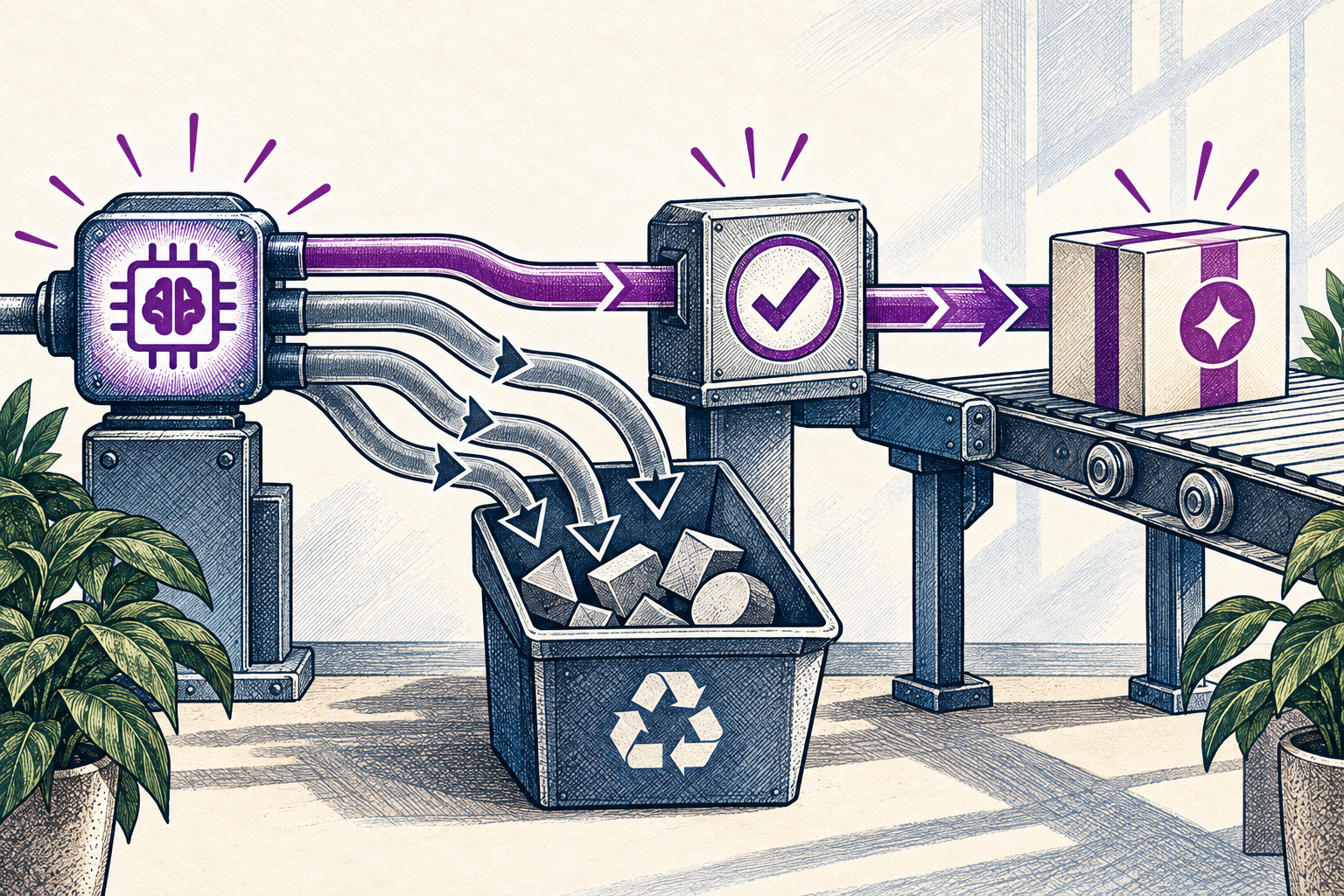
A long answer can give you plenty to consider. You still need to decide what deserves a place in your business.
Decide what you want the work to accomplish
Consider a hypothetical bicycle repair shop with some unused appointment times on Wednesday afternoons. The owner asks AI for help getting more business. In this invented example, the answer proposes a video series, a discount campaign, a newsletter, and a new service package.
Now the owner has content to prepare, prices to consider, and another offer to work out. The original need was much narrower: find customers whose repairs fit the available time and help them book those appointments.
The recommendations may contain useful ideas. Choosing among them requires knowing which customers the shop can serve, what work it has room for, and how those customers can arrange a repair. Those decisions give the owner a reason to accept an idea, change it, or leave it for another time.
Give AI a business purpose clear enough that you can judge whether its work serves it. For this shop, the purpose might be to help existing customers book suitable repairs into the available Wednesday appointments. That gives the owner something more specific to work with than a general request for growth.
If the purpose is still uncertain, use the conversation to explore the choices. Ask what information would help you decide, and check the assumptions in the answer. You can learn while you clarify the work. A proposed plan still needs your judgment before it becomes a commitment.
Choose one part of the work AI can help with
Once the purpose is clear, decide what you want help producing. In the shop example, that could be a draft message explaining the available appointments to existing customers.
Give it the details the message needs: which repairs are suitable, the available times, how booking works, and any limits the customer needs to understand. Use information you have checked. If a detail is unresolved, ask for it to be left open for your decision.
The information you provide should make the work easier to use, including the details that prevent a misunderstanding. A message about Wednesday appointments needs to preserve the requirement to book. A shorter message that implies someone can walk in whenever they like could create a promise the shop is unable to keep.
Be clear about the extent of the assignment, too. A draft message can be one draft message. You can ask for alternatives when they help you make a choice, without turning a small communication into a month of new work.
Review the meaning, including what disappeared
Read the draft as the person who would receive it. What would they believe they can do after reading it? Compare that with what your business can provide.
Suppose the shop's draft says, “Bring your bike in on Wednesday afternoon.” It sounds straightforward. But the owner asked for a message about appointments, and the invitation has lost that condition. A correction would need to tell the customer to contact the shop to book a suitable time and confirm that the repair can be accommodated.
Compare the meaning of the draft with the meaning of the information you supplied. Check for added promises as well as missing details. A confident sentence may still need a fact checked. A concise sentence may need some context put back.
Your review needs to protect what the customer will understand, as well as whether the writing sounds good. Even a clear request and accurate source information need that review. If the draft changes the meaning, correct it before you use it.
The same attention applies to an internal plan or a set of instructions. Ask whether a person following it would do what you intended. Look for choices presented as settled when you still need to make them, or explanations shortened so far that someone would have to ask what they mean.
Count the work required to make the answer useful
When you assess whether AI helped, include the time spent providing information, checking the facts, restoring missing context, and rewriting sentences until they sound like something you would say. Producing a draft is one part of the work. Getting to something accurate and usable is the point at which you can judge that assignment.
If the answer repeatedly creates work outside the task, narrow the request. If important context keeps disappearing, identify the details that must remain and check them in the next draft. You can also decide to finish a particular piece yourself when that is the more practical choice.
There is a separate business question after the message is ready: does it help suitable customers book the available appointments? A well-written draft alone cannot answer that. You need to observe what happens when it is used before deciding whether the approach is helping the shop.
Use AI in service of a decision you understand and work you are prepared to evaluate. For the repair shop, that means a customer can understand which appointment is available and how to arrange it. Keeping that person in view gives the owner a reason to choose the next sentence, the next task, and the next use of the tool.