
In a hypothetical bakery, the owner hires a designer to build a form for advance orders. The designer prepares it and asks the owner to confirm the available collection times and the cutoff for changes. The owner wants the new process to make the bakery easier to manage, but the questions remain unanswered while she handles the day's orders.
The form waits. Customers keep calling, messages need to be copied into the order book, and the owner wonders why paying for help has left her with the same work.
Check what you hired someone to do
Before you decide what has gone wrong, return to the agreement. What was the person responsible for delivering? What did you agree to supply or decide? Did the work include putting the change into use, or preparing something you would introduce?
In the bakery example, the designer might be responsible for building and testing the form. The owner might have retained the decisions about what the bakery can promise customers. If so, the designer needs those decisions to finish. If the agreement also included helping staff use the form, that part of the work needs to be delivered, too.
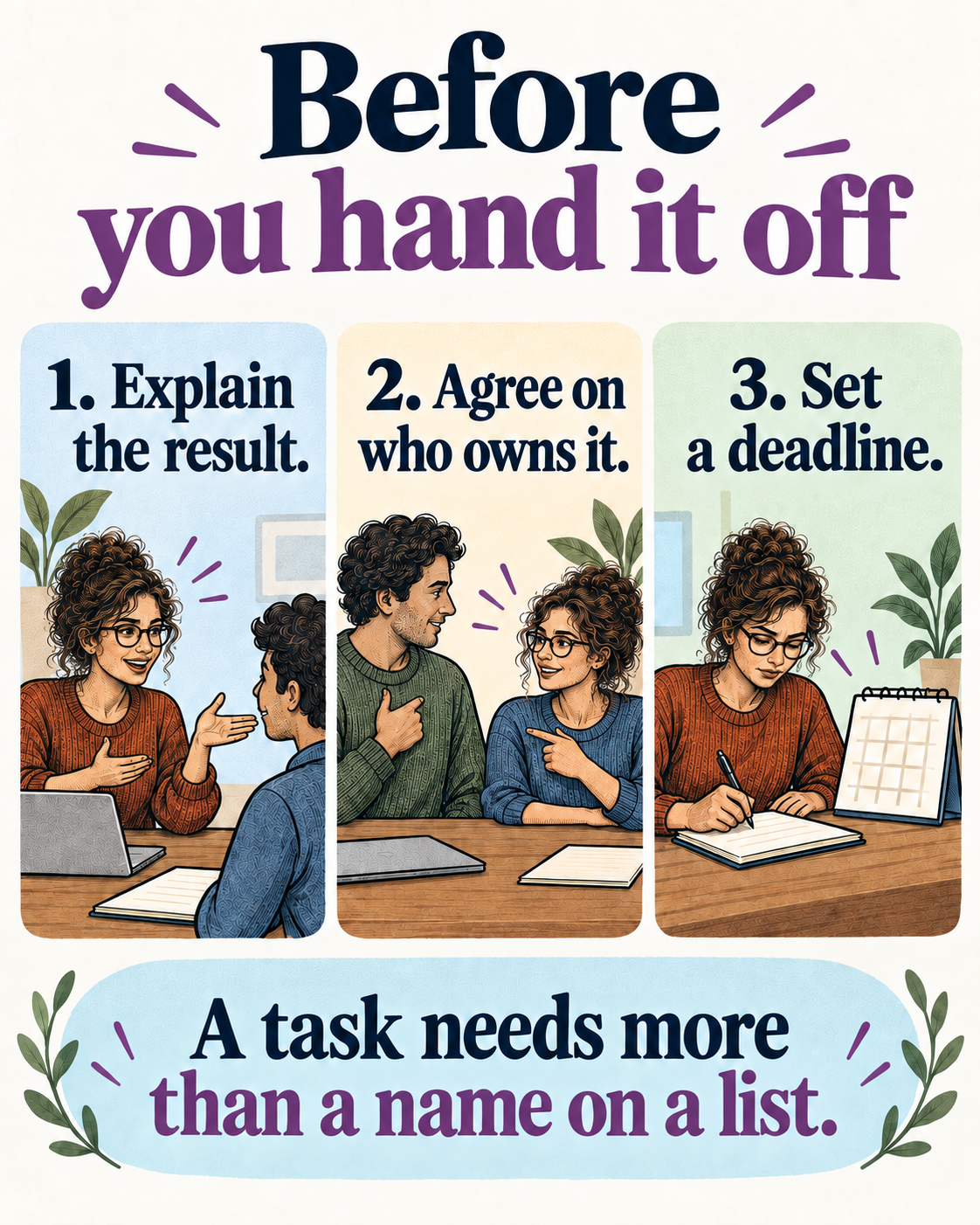
A useful handoff makes both people's responsibilities clear. Ask what is complete, what remains, and what is preventing the next step. An unfinished assignment, an unanswered owner decision, and an unclear agreement need different responses.
If the agreement was vague, resolve it together. That conversation can include whether the work has changed and what further help will cost. Expecting someone to absorb a new responsibility without discussing it leaves both of you working from assumptions.
Make the business decisions the work depends on
The designer can recommend a way to present the collection times. The bakery still needs to decide which times it can reliably offer. That choice depends on preparation, staffing, and the promises already made to customers.
If you have kept that decision, make it. If someone else can make it, agree on the limits and give them the information they need. Talk through a likely decision together to check that they understand when they can proceed and when they need to involve you. Where you feel hesitant, explain what you need to understand before you can say yes. A request for a recommendation, a revision, or a smaller first release gives the other person something to work with.
Paying for help does not complete the decisions you have retained. The person you hired may be ready to move forward and still have no answer to a question your business needs to settle.
This is where the difference between delegation and abdication becomes practical. With delegation, you agree on what another person will take responsibility for and carry out the part you keep. With abdication, you expect them to make the work succeed while leaving them to resolve responsibilities you have neither completed nor given them permission to take on.
You can change that arrangement. Be explicit about what you are transferring, what you will continue to decide, and what you need to provide for the work to proceed.
Put the agreed change into use
Once the collection times are confirmed, the form can be finished. The bakery then needs a way to receive those orders and prepare them alongside orders coming through other channels. Someone needs to know where to find the submissions and how to confirm that an order has been accepted.
Agree on who will introduce that part of the process. The designer may have been hired to help with it. A manager may take responsibility. The owner may need to arrange it herself. The finished form gives them something to use; they still need to connect it to the day's work.
Before judging the effect of a change, check whether the business is actually using it as intended. In this example, that means following a test order from submission through receipt, confirmation, and preparation. If it stops somewhere, find out what is missing and who will address it.
Once orders are moving through the process, you can ask whether it is helping. Are the details needed to prepare an order available? Are customers receiving the confirmation they were promised? Is someone still copying the same information unnecessarily? Those observations give you something specific to discuss with the person who helped you build it.
Find the part that is waiting for you
Choose one piece of paid help that has yet to produce the benefit you expected. Ask the person doing the work what they need from you to take the next step. Ask them to make the request specific enough that you can act on it.
A question about available collection times can be answered. A request to review one test order can be completed. If the response is broader, work through it until you understand the decision, information, or action being requested, and check that it fits your agreement.
Your part in delegation is to make it possible for someone else to carry out the responsibility you agreed they would take. Sometimes that means making a decision you have postponed. Sometimes it means asking them to finish work they already agreed to do. Knowing which one you are dealing with gives you a more useful conversation than asking why the help has failed.