
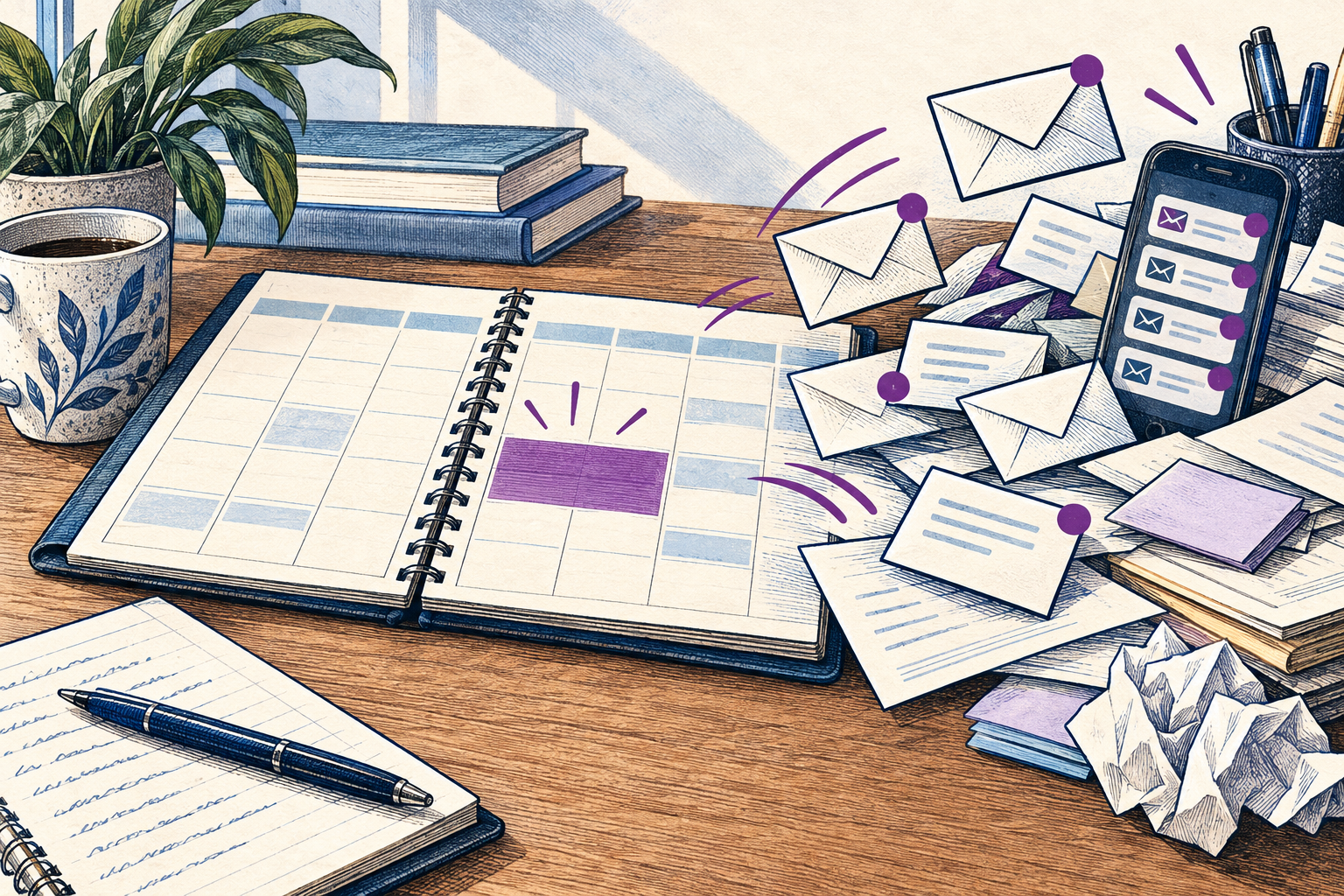
The next message may take only a moment to answer. But when you return to the estimate, you have to find where you left off. Were you checking the materials cost? Had you included the extra visit? You read back through your notes, pick up the calculation, and another message appears.
By the time you need to leave for an appointment, you have sent several replies and still owe the customer an estimate. You meant to take care of them, too.
Notice what pulls you away from the work
Look at what happened the last time a task kept getting interrupted. Did a notification pull you into email? Did you open it while you were thinking through a difficult part? Were you expecting an answer you needed before you could continue?
Those are different situations. If you are waiting for a customer's approval, checking for it may be part of completing the work. If you open the inbox whenever a calculation gets difficult, the email habit may be giving you something easier to do for a moment. If a notification announces a routine message, the sound may be deciding when you change tasks.
Before you change your email routine, find out which checks help you complete the work and which ones interrupt it. You can learn something useful from one morning. Keep a small note beside the task and record what sent you to the inbox. A few words will do: waiting for approval, new notification, or opened it without thinking.
You are looking for a pattern you can do something about. The messages themselves may be useful. The question is whether they need your attention while you are trying to finish something else.
Choose a checkpoint that fits your responsibilities
Give yourself a period to stay with a particular piece of work, with a clear point when you will return to email. In the estimate example, that could mean finishing the materials calculation before checking again, within the response window you have committed to customers.
Choose the task and the time together. An open-ended promise to finish a complicated proposal could leave people waiting much longer than you intended. A defined piece of that proposal is easier to fit between commitments.
The time you spend concentrating on one customer's work still needs to honor your responsibilities to other customers. Check what you have promised, whether something time-sensitive is underway, and who can respond if help is needed. Urgent requests can arrive by email. A different contact method only helps when the people involved know to use it and someone can respond.
If you handle those requests yourself, a shorter period may fit your business better. If someone else is covering them, agree on what they can handle and what needs to reach you. You may also need to explain a change in response times to people who have come to expect an immediate reply.
Your checkpoint can change with the day's work. The purpose is to give a task some uninterrupted attention while keeping your commitments understandable and achievable.
Make returning to the task easier
Once you have chosen an appropriate work period, close the inbox or pause routine notifications if your response arrangements allow it. Keep the agreed urgent contact route available. Put the information you need for the task in front of you, including any email you need to refer to, so retrieving it does not require scanning new messages.
You may still reach for the inbox. Notice when it happens. If you remember a message you need to send later, write yourself a brief reminder and continue with the work in front of you. If an interruption does require a response, leave a short note about where you stopped. “Check whether the quote includes the second visit” gives you a place to resume.
Email needs time of its own, too. At the checkpoint, give the messages your attention. Decide what needs a response now, what needs a place in your work plan, and what can wait. A promise to reply later becomes useful when you leave enough time to follow through.
Judge the trial by the work and the people waiting
Try this with one task before rearranging your whole week. Choose a piece of work, set the next email checkpoint within your obligations, and make the necessary response arrangements. When you return to the inbox, look at what happened on both sides.
Did you get further with the task? Did you keep the response commitments you made? Did something need attention sooner, and was it handled? Use those answers to adjust the length of the work period or the arrangements around it.
A useful email routine helps you finish the work people are depending on and stay reachable when your responsibilities require it. For that customer waiting on an estimate, being taken care of includes receiving the estimate. Giving yourself time to finish it is part of serving them.